
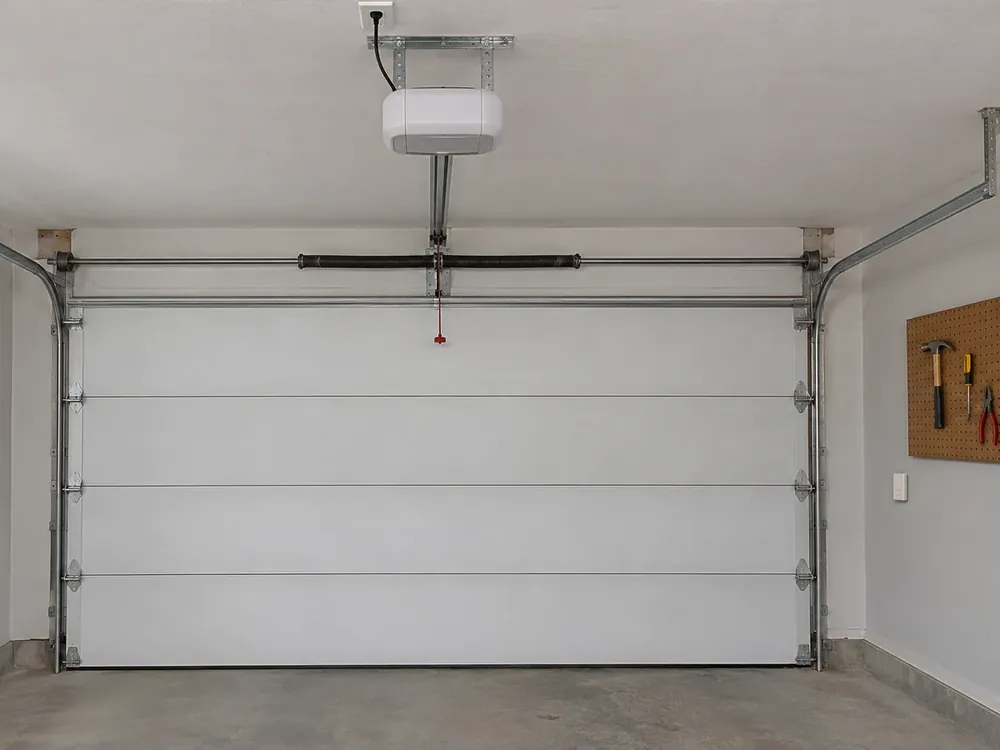
When cold-weather trouble raises the question of replacement, garage door opener and installation cost includes the unit, accessories and the work needed to operate the door safely.
Drive Type Changes the Equipment
On a quiet winter morning, a noisy opener makes drive type and mounting location useful parts of the replacement discussion.
- Chain, belt and screw drives move a ceiling-mounted trolley through different mechanisms; a wall-mount opener uses a different layout.
- Common drive types include chain, belt, screw and wall-mount; compare fit and operating sound alongside the other equipment choices.
- A wall-mount design needs compatible door hardware and room beside the opening, so it isn't an automatic substitute for an overhead rail.
- Your technician checks the ceiling, side clearance and door arrangement before recommending a drive and mounting plan.
Door Weight Comes Before Added Power
If an opener strains during cold weather, the door's balance needs attention before a more powerful motor is selected.
- A heavy or insulated door needs a compatible opener, but added motor power doesn't correct a broken spring or a binding track.
- Garage door opener repair cost belongs in the comparison when the existing motor still suits the door and a specific fault is repairable.
- Genie's safety instructions warn against operating a jammed door or one with a broken spring; stop cycling the opener when either condition is suspected.
- The inspection separates the door's lifting problem from a motor or control failure so the recommended work addresses the cause.
Backup Power and Controls Add Choices
During a winter power outage, battery backup is a feature to consider when comparing new garage door opener cost.
- Specify a model with compatible backup equipment; don't assume every opener includes a battery or accepts the same accessory.
- Phone control, an outside keypad and extra remotes are separate conveniences to identify in the equipment list.
- Ask which functions need home internet and which controls work locally; phone access and backup operation serve different purposes.
- The visit establishes the door's requirements and the access features you want, then identifies the equipment needed for that combination.
Installation Includes Removal and Electrical Planning
When winter wear prompts replacement, the garage door opener installation fee should describe the work beyond attaching the new motor.
- Old-unit removal, rail replacement, mounting supports and new controls should each be addressed in the installation scope.
- An electrician handles any needed outlet or fixed-wiring work; 16 CFR 1211's installation instructions state that the operator is not equipped for permanent wiring and direct the owner to contact an electrician to install a suitable receptacle if one isn't available.
- Your technician checks where power and mounting points are located, so electrical work and door work can be planned together.
- Before work proceeds, one of our local garage door partners will describe the unit, accessories and installation charges for the chosen setup.
Safety Setup Completes the Job
If frost or a bumped sensor makes the door reverse, installation planning must include the photo eyes and the opener's safety settings.
- Your technician sets travel and force according to the selected model's instructions, then tests the contact reverse and photo-eye response.
- 16 CFR 1211 instructs owners to retest the door opener after adjusting either the force or the limit of travel; stronger closing force isn't a remedy for an obstruction.
- Call about a failing opener now; a remote battery or wall-control lock setting can be discussed during the call without repeated door movement.
- The opener installation visit finishes with operating checks and instruction on the controls and manual release.